Drainfield Failing in Heavy Clay Soil? Why Gumbo Drains So Poorly
Quick Answer: A drainfield in heavy clay soil fails more often because clay holds water instead of passing it downward. Wastewater leaves the tank, enters the soil, and has to soak through it. Gumbo clay around Greater Houston is extremely fine grained, swells tight when wet, and cracks open when dry, so the field swings between almost no absorption and uneven absorption. Add heavy rain, a high water table, and a biomat that builds up along the trench walls, and the field loses capacity a little at a time. Early signs include slow drains, gurgling, soggy ground, and odors over the field. A tank inspection plus a look at the field and soil conditions shows whether the field can be restored or needs a different approach.
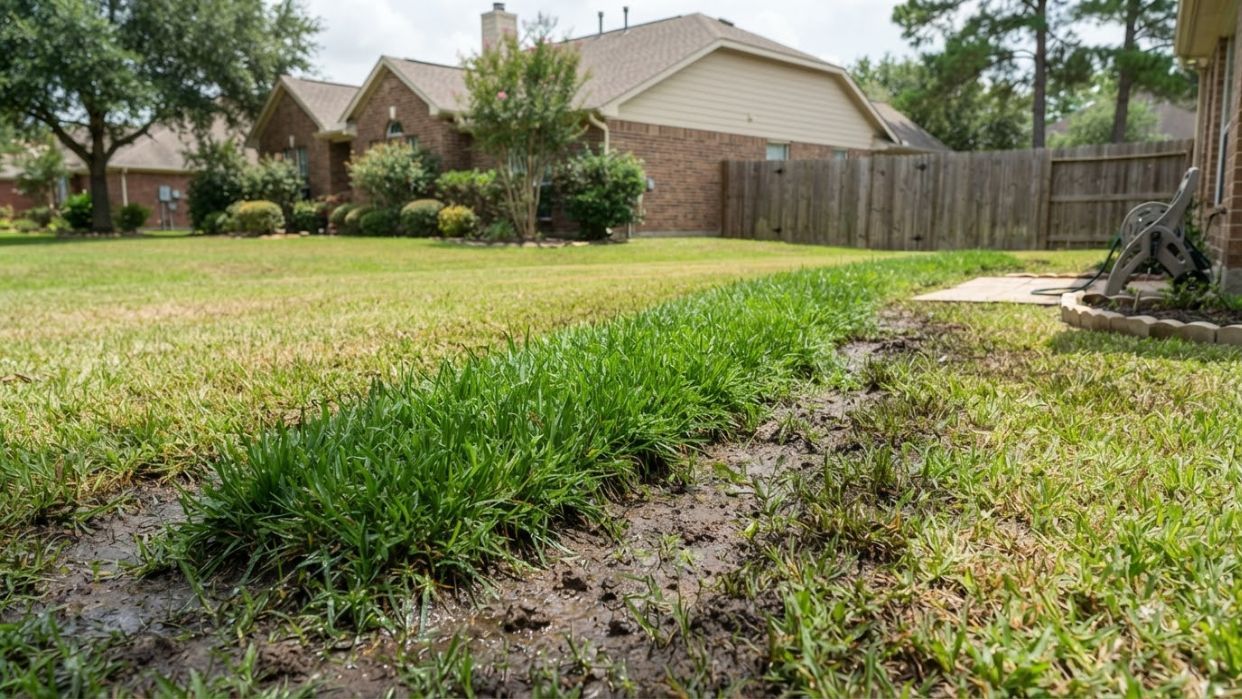
The first sign usually isn't dramatic. A shower takes a little longer to empty. The washing machine seems to make the toilet gurgle. You walk across the back yard after a rainy week and your shoes sink a half inch into one stretch of lawn, right where the lateral lines run. You pumped the tank not long ago, so you assume the problem must be something small.
Then it happens again, and again, each time a bit worse than before.
When a drainfield sits in heavy clay, that slow slide is common. The tank may be sound and the plumbing in the house may be fine. What is struggling is the soil, which has to accept every gallon your household sends it, every day, and clay is about the hardest material in the ground to ask that of.
What a Drainfield Actually Needs From the Soil
A septic tank only does the first part of the job. It lets solids settle and scum float, then sends clarified liquid out toward the drainfield. The drainfield does the rest. That liquid trickles out of perforated pipe into gravel or a chamber, then soaks into the soil, where microbes living in the soil finish the treatment before the water moves down and away.
That last step depends on the soil having room. Water has to move through the pore spaces between particles, and air has to be present in those pores for the treatment organisms to work. A soil that is open enough to pass water but fine enough to filter it does the job well. Sand drains too fast and treats poorly. Clay does the opposite, holding on to water so tightly that it barely moves.
Pore Space Matters
Clay particles are tiny, leaving narrow gaps between them. Water moves through these pores slowly, and saturated soil leaves little oxygen for microbes.
Time Matters
Sandy loam may absorb daily wastewater within hours, while tight clay takes much longer, allowing incoming wastewater to arrive before previous flows clear.
Space Matters
Clay absorbs less wastewater per square foot, requiring larger or differently designed drain fields. Undersized fields may function initially before gradually declining.
Why Gumbo Behaves Differently From Ordinary Clay
Around Greater Houston, the heavy clay people call gumbo belongs to a family of soils that are extremely clay rich, often with a clay content well above forty percent and in some places much higher. Those soils are known for how they react to moisture. They swell when wet and shrink when dry, and during a dry spell they can pull apart into wide cracks that run deep into the ground.
That behavior creates two separate problems for a drainfield.
When It Is Wet, It Seals
After heavy rain, clay swells and closes its pores. Water drains slowly, saturating subsurface layers and sometimes pooling at the surface.
When It Is Dry, It Cracks
During hot, dry weather, deep cracks form in clay. Effluent can bypass treatment through them before rain closes the cracks again.
The result is a field that never gets the steady, even conditions it was designed around. It absorbs unevenly, it treats unevenly, and it carries more stress during the exact weeks when your household is also dealing with a wet yard.
Tip: If your yard stays soft or squishy for days after a rain while neighbors on sandier lots dry out quickly, that is useful information. Mention it to the crew at your next visit. It tells them a lot about how your soil holds water before they ever open the tank.
The Biomat and How Clay Makes It Worse
Every working drainfield develops a thin layer of biological growth along the gravel and soil surface where effluent first meets the ground. This layer is called the biomat, and a thin healthy one is actually part of how the system treats wastewater. It slows the flow just enough to keep treatment effective.
The trouble starts when the biomat thickens. It thickens when the field is loaded with too much water, too many solids, or too much grease and soap, and when the soil underneath is already slow to drain. In clay, a thick biomat sits on top of a soil that was barely passing water to begin with. The combined resistance can drop absorption to a fraction of what the field was built to handle.
Several everyday things speed this up:
Solids Escaping the Tank
Skipped pumping allows sludge buildup, sending solids into the drainfield where they clog pipes and block soil pores permanently.
Too Much Water at Once
Hydraulic overload occurs when excessive water from laundry, leaks, sump pumps, or household demand exceeds soil absorption capacity.
Roof and Surface Runoff
Runoff from roofs, driveways, and slabs saturates drainfield soil, potentially overwhelming already wet ground during rainy seasons.
Compaction and Smeared Soil
Clay is also easily damaged by anything that presses or smears it while wet. Heavy equipment, vehicles, and even repeated foot traffic across the field compress the soil and close up pores that were already small. Working in wet soil during installation or repair can smear the trench walls and leave a glazed surface that water struggles to pass through.
Once pore space is lost to compaction, it is very hard to get back. That is one reason a field in clay can fail early even when the household uses water carefully. Parking a truck over the field one wet week, or running a trencher over it before it dried, can leave a lasting mark.
Signs the Field Is Struggling
A drainfield in clay rarely fails all at once. It gives off signals, and the earlier you catch them, the more options you tend to have.
Slow Drains Across the House
When every fixture drains slowly simultaneously, the problem usually lies downstream, within the septic tank or drainfield.
Gurgling and Bubbling
Air pushed backward through drain lines indicates wastewater cannot move away from the system as quickly as expected.
Soggy Ground or Bright Green Grass Over the Field
Excess moisture and nutrients surfacing above lateral lines suggest wastewater is failing to absorb properly into the soil.
Odors Outdoors
Sewage smells above the drainfield, especially after rainfall, may indicate effluent is surfacing or collecting beneath the grass.
Backups That Follow Weather
Problems after storms suggest saturated soil, while recurring backups during dry weather may indicate declining drainfield absorption capacity.
WARNING: Do not run extra water to flush things through, and do not pour drain cleaners or additives into the system hoping to clear a struggling field. More water adds load to soil that cannot take it, and harsh chemicals can upset the tank's balance without fixing the soil.
What a Crew Looks at in a Clay Soil Field
Sorting out whether the problem is the tank, the field, the soil, or the water load takes a methodical look. A crew starts with the tank, because that is where a lot of field trouble begins.
Sludge And Scum Levels
Measuring both shows whether solids have been moving toward the outlet.
Baffles And Tees
Damaged or missing baffles let solids and scum drift out toward the field.
Effluent Filter
A clogged filter can back water up into the house, which can look a lot like field failure.
The Field Itself
Probing the area, checking for standing liquid in the distribution box or inspection ports, and noting where the ground feels soft shows how much of the field is still working.
Water Use And Runoff
Reviewing how much water the household sends to the system, and where roof and yard water is going, often turns up easy wins.
Soil conditions on the property shape what happens next. The same symptoms can call for different answers depending on how deep the clay runs, how high the water table sits, and how much room is available for the field.
Can a Clay Field Be Saved?
Sometimes, yes. If the tank has been neglected and solids have been the main problem, cleaning the tank, replacing failed components, and giving the field time to rest can let it recover some capacity. Reducing the water load, redirecting runoff, and keeping vehicles off the area also help.
Other times, the soil is simply the limiting factor. A field that was marginal from the start, or one that has taken years of overload, may not come back to a dependable level. In those cases the conversation turns to alternatives, such as adding field area, changing how effluent is distributed, or using a different type of system designed for tough soil. That decision is better made with the facts from an inspection than from a guess.
Living With Clay Soil Without Fighting It
You cannot change the ground under your yard, but you can work with it.
Keep the Tank Pumped on a Schedule
Pump regularly based on household size, water usage, laundry frequency, and the tank's capacity.
Spread Out Water Use
Distribute laundry and other water-heavy activities throughout the week to reduce drainfield overload.
Fix Leaks Quickly
Repair running toilets and dripping faucets promptly to prevent excessive wastewater from overwhelming the drainfield.
Keep Weight Off the Field
Avoid parking vehicles, operating heavy equipment, or constructing buildings over drainfield pipes.
Direct Roof and Yard Water Elsewhere
Ensure gutters and downspouts direct rainwater away from the septic drainfield to prevent saturation.
Watch the Yard After Storms
Monitor persistent soft ground after rainfall and contact a septic professional if wet patches linger.
Frequently Asked Questions
Why does clay soil make a septic drainfield fail faster?
Clay holds water tightly and passes it slowly, so it cannot absorb wastewater as fast as a household produces it. Swelling, cracking, and a thickening biomat steadily reduce field capacity.
Is gumbo clay the same as any other heavy clay?
Gumbo is a local name for very clay rich soil, sticky when wet and deeply cracked when dry. Its effect on a drainfield matches other heavy clays, though swings between sealed and cracked can be more extreme.
Will pumping the tank fix a failing drainfield in clay?
Pumping removes sludge and scum and protects the field, but it won’t clear a clogged biomat or reopen compacted soil. An inspection shows whether the tank, the field, or both need attention.
Why does my drainfield seem worse after a rainy week?
Rain saturates the soil around the field, so clay cannot take more water. Effluent may back up into the house or rise to the surface. If it improves as the ground dries, saturation is a factor.
Can I plant trees or build near my drainfield in clay soil?
Avoid it. Roots invade pipes and trenches, while structures or paving compact soil and block air exchange. Shallow rooted grass is safest, and you should locate the field before planting or building nearby.
What should I do first if I suspect my drainfield is failing?
Cut water use right away by spacing laundry, shortening showers, and fixing leaks. Keep vehicles and equipment off the field, then have the system evaluated before anything is replaced.
Working With Clay Soil Instead of Against It
Heavy clay is not a flaw in your property, and a struggling drainfield does not mean you did something wrong. It is what happens when a system works hard in soil that makes the work difficult. Understanding how gumbo holds water, how a biomat forms, and how rain and compaction add stress makes the early signals easier to read. Slow drains, soft ground, and weather linked backups are information, and acting on them early leaves more options than waiting for a flooded yard.
A careful look at the tank, the field, and the soil shows how much capacity remains and what to do with it. A-1 Cleaning & Septic Systems, LLC
has spent 30
years serving homeowners across Spring, TX, and that time has shown that regular pumping, steady water habits, and keeping weight off the field protect a clay
drainfield
far better than emergency fixes. A system that is understood and maintained tends to keep working through many wet seasons, even in difficult ground.