Sewage Smell in the Yard but No Backup Inside? Where It's Venting
Quick Answer: A sewage smell in the yard with no backup inside almost always means gas or effluent is escaping somewhere between the tank and the drainfield, not that wastewater is failing to leave the house. The most common sources are a damaged or unsealed tank lid and riser, a plumbing vent pipe that isn't carrying gas high enough above the roofline, or a drainfield that's started surfacing effluent in one low or oversaturated section. Because the tank is still accepting wastewater and the drains are still clearing normally, the plumbing inside the house has nothing to do with it. In Greater Houston, dense clay soil and a shallow water table make surfacing odors from the field more common than in better-draining regions, since the ground has less spare capacity to absorb effluent even when a field isn't failing outright. A smell that's constant, tied to one specific spot in the yard, or paired with a soft or wet patch of ground is worth having looked at directly rather than waited out.
The toilets flush fine. The shower drains the way it always has. Nobody's dealing with a slow tub or a gurgling sink. And yet every time you step out the back door, there it is: that unmistakable sewage smell drifting across the yard, sometimes near the patio, sometimes stronger by the fence line, gone for a day and then back again after the next warm afternoon.
It's a strange kind of problem, because it doesn't behave like the septic issues most homeowners have heard about. There's no backup to point to, no slow drain to blame, just an odor that shows up outside and won't fully go away while everything indoors keeps working the way it's supposed to.
That disconnect is actually the clue. An indoor backup means wastewater can't leave the house. An outdoor-only smell with no backup means wastewater is leaving the house just fine, but gas or effluent is escaping somewhere between the tank and the drainfield before it finishes its normal underground path. Those are two different problems with two different causes, and treating one like the other wastes time chasing the wrong thing.
Why the Smell Stays Outside When Nothing's Backing Up
A septic system is designed to keep sewage gas contained the entire way through. Wastewater leaves through the sewer line, settles in the tank, and clarified liquid moves to the drainfield for absorption. Gas is meant to vent only through the roof stack, engineered to carry it up and away.
When a homeowner smells sewage outside with no indoor symptoms, the contained path is holding for daily use. Wastewater is still leaving the house and the tank is still accepting it, but something along the buried portion isn't staying contained. Nothing is backed up; something is leaking or venting improperly.
The tank can be functioning correctly and still be the source of an outdoor odor. A tank accepting and processing wastewater normally can still leak gas if a seal or vent is compromised. That's why this trips people up: the usual warning signs are absent, yet the tank is often exactly where the smell starts.
The Three Places an Outdoor-Only Odor Usually Starts
Once indoor backup is ruled out, the search narrows to three general locations, each with a different mechanism behind it.
A Damaged Or Improperly Seated Tank Lid, Riser, Or Inspection Port
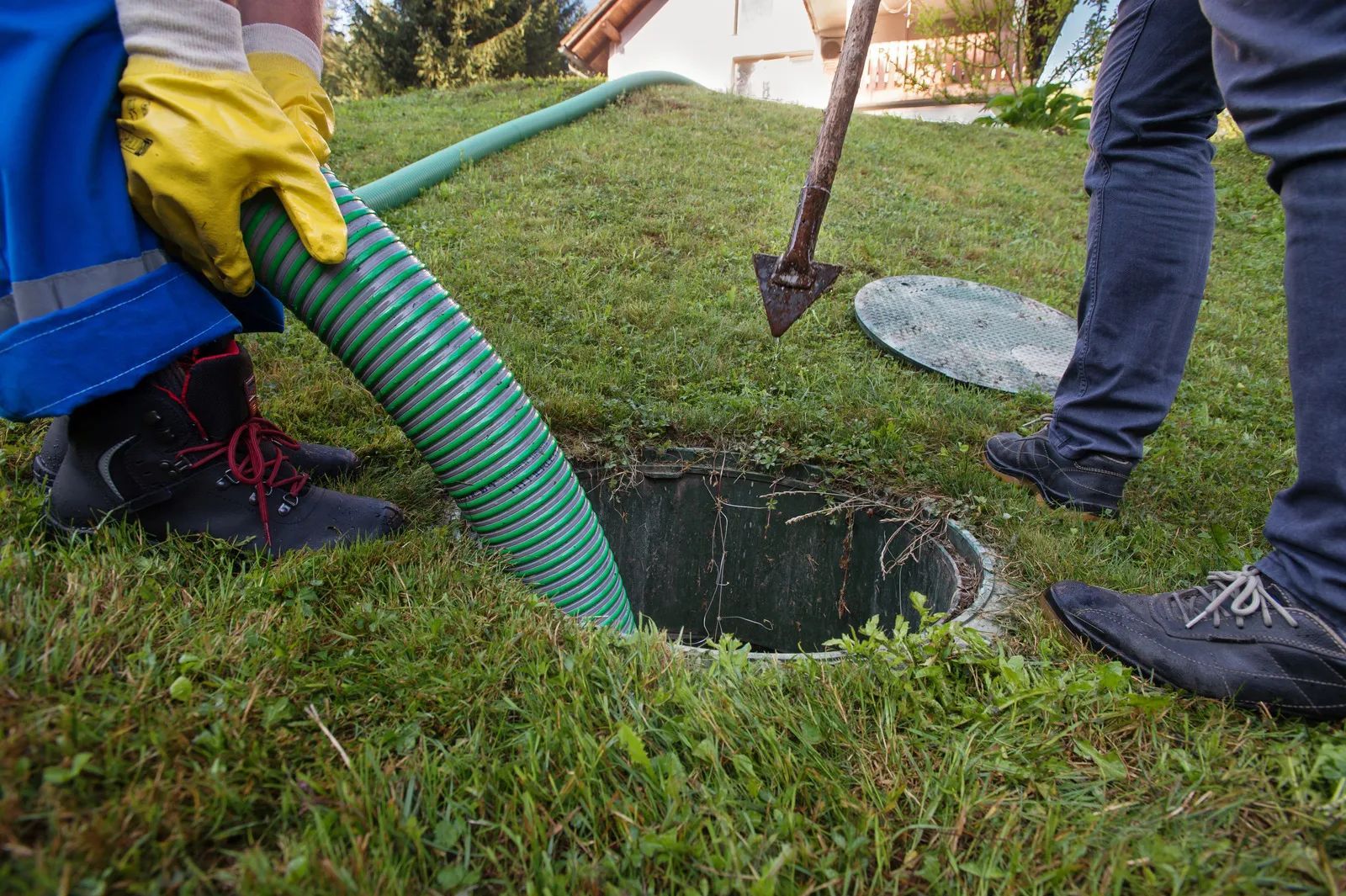
Septic tanks rely on sealed lids and access points to contain gases. Aging gaskets can harden, shrink, and allow odors around risers. Misaligned concrete lids, cracked inspection caps, or missing covers create similar gaps, letting normal sewage gases escape directly into the surrounding yard.
A Plumbing Vent Pipe That Isn't Clearing The Odor Away From Ground Level
The roof vent should carry sewage gases upward, where airflow disperses them safely. If the stack is blocked, too short, or affected by surrounding trees or structures, odors can settle near ground level. This often creates a general sewage smell across the yard rather than one localized area.
A Drainfield Section That's Begun Surfacing Effluent Instead Of Fully Absorbing It
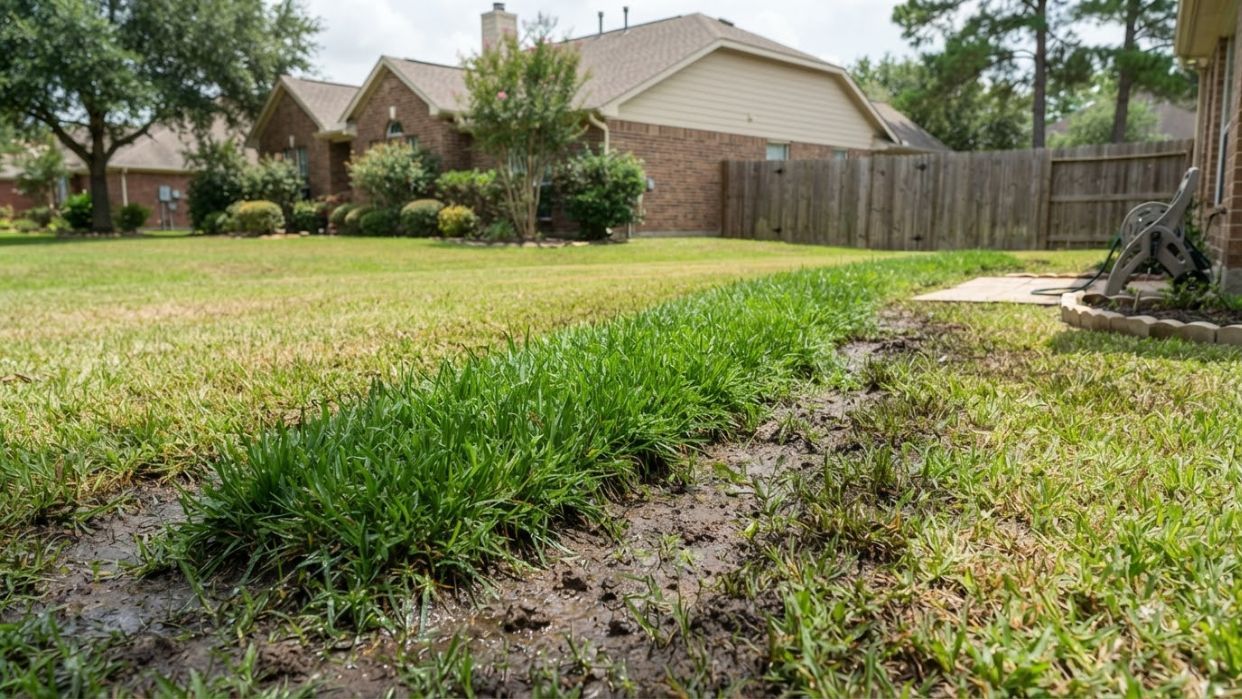
A drainfield depends on soil absorbing wastewater efficiently. If distribution problems or poorly draining soil overload one section, effluent can rise instead of moving downward. The result is often a concentrated sewage odor, along with damp, spongy ground that remains noticeably wetter than surrounding areas.
Each of these has a different fix, which is exactly why guessing rarely works out. A seal issue at the tank is a quick, contained repair. A vent problem is about airflow, not the septic system's internal condition at all. A surfacing drainfield section points to a distribution or absorption issue that needs a direct look at the field itself, not just the tank.
The Greater Houston Factor: Why Surfacing Shows Up Here More Than Elsewhere
Where the system sits changes how often a drainfield-related odor develops, and the ground across much of Greater Houston tilts the odds toward it in ways that don't apply everywhere.
Heavy Clay Soil Gives A Drainfield Very Little Margin For Uneven Distribution
Heavy clay soil drains slowly, leaving little room for uneven wastewater distribution. If one trench receives slightly more effluent than others, the clay beneath it can quickly become overloaded. Problems that remain hidden in faster-draining soils may instead cause visible surfacing and noticeable sewage odors.
A Shallow Water Table Shrinks The Buffer Between The Trenches And Saturated Ground
A shallow water table leaves less dry soil beneath drainfield trenches for wastewater absorption. When one section receives extra effluent, there is less room underground to handle it. That excess can surface quickly, while the same distribution imbalance may remain unnoticed on higher, better-draining properties.
Heat Accelerates The Smell Even When The Underlying Cause Is Minor
Warm temperatures can make septic odors noticeable even when the underlying problem is minor. A small amount of surfacing effluent or a marginal seal leak may go unnoticed during cooler weather but become obvious during hot Houston afternoons, making seasonal odor complaints especially common.
WARNING: A patch of ground that stays wet, spongy, or smells strongly of sewage over the drainfield shouldn't be walked across, played on, or left for the mower to run over repeatedly. Standing effluent at the surface is untreated wastewater, and letting people or pets spend time on it puts them in direct contact with that risk. It's also a sign the affected section of the field is losing its ability to absorb what the system is sending it, and the longer that continues, the more strain it puts on the rest of the field to compensate. Keep the area off-limits until it's been looked at, and hold off on adding more water to the system through extra laundry or long showers in the meantime.
How to Narrow Down Where the Smell Is Actually Coming From
Before assuming the worst, a homeowner can usually get a decent read on which of the three sources is involved just by paying attention to a few details.
Note Whether The Smell Is Constant Or Comes And Goes With The Weather
Odors that worsen on hot, still days and fade with cooler, breezier weather often suggest vent or seal issues. Steady odors concentrated around one area are more suggestive of surfacing drainfield problems.
Walk The Yard And Pinpoint Exactly Where The Smell Is Strongest
A diffuse smell across the property may point toward the roof vent stack. Odors strongest near tank lids or the drainfield, then fading with distance, usually suggest the source is localized there.
Look For A Damp Or Discolored Patch Rather Than Relying On Smell Alone
Surfacing effluent often leaves visible clues, including soft ground, standing water, or unusually green grass. Vent or seal problems generally create odors without these changes because wastewater remains contained rather than reaching the surface.
Tip: Do the walk-around at two different times, once in the early morning while it's still cool and again in the late afternoon after the ground has had all day to warm up. Odor from a vent or seal issue tends to swing noticeably between those two windows, since heat and airflow both play a role in how fast gas disperses. Odor from a surfacing drainfield section tends to stay more consistent across both checks, since the source is physical rather than purely atmospheric. That contrast alone can point you toward which of the two general categories you're dealing with before anyone opens the tank.
When to Call a Professional Rather Than Keep Guessing
An outdoor odor with no indoor symptoms isn't an emergency in the way an active backup is, but it's not something to leave unaddressed indefinitely either. A few situations call for a direct inspection rather than more waiting and watching.
The smell is tied to a specific, damp patch of ground rather than the general area. That combination is the clearest sign of a surfacing drainfield section, and it's not something a homeowner can verify or resolve by walking the yard. It calls for the distribution box and the affected trench to be opened and checked directly.
The odor has been present for more than a week or two without improving. A short-lived smell after unusually heavy tank use, like hosting a large gathering, can resolve on its own within a few days. An odor persisting well past that window is more likely tied to a genuine seal, vent, or distribution issue than a temporary spike in use.
You've checked the accessible lids and vent covers and everything looks intact, but the smell continues. A visibly cracked lid or missing inspection cap is an obvious fix. When nothing looks wrong from the surface and the odor is still there, the cause is more likely underground, at the distribution box or within the trenches themselves, where a homeowner can't see it without excavation.
The smell has grown stronger or spread to a larger area over time. A source getting worse rather than staying steady points toward a seal or field condition that's continuing to deteriorate, and it's worth having assessed before it progresses further.
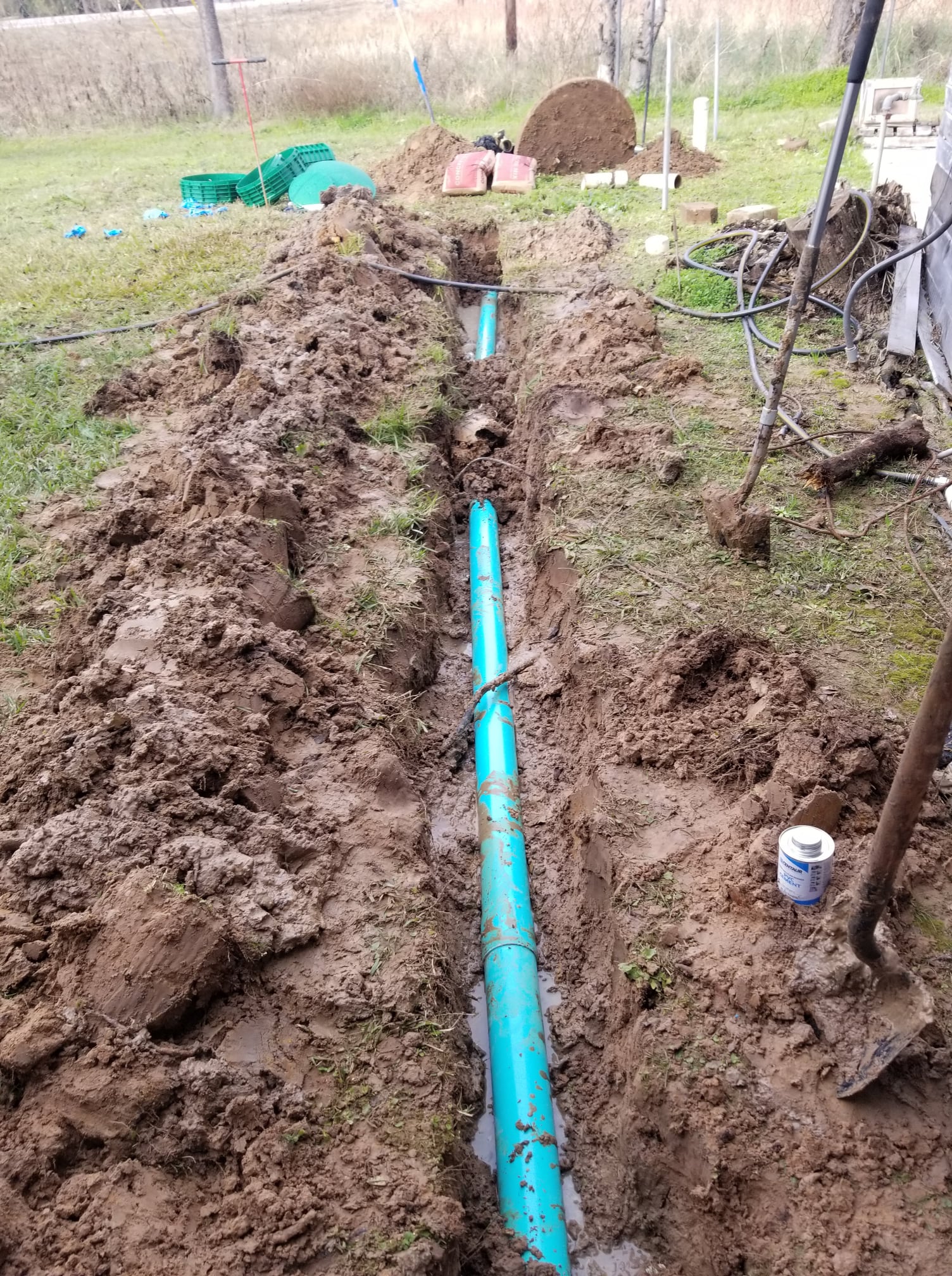
A direct inspection at this point usually starts above ground: checking every lid, riser, and inspection cap for a proper seal, and walking the full drainfield looking for damp ground, unusual grass growth, or any low spots. From there, the tank gets opened to confirm it's holding at a normal level, and the distribution box gets checked to see whether effluent is reaching every trench evenly or favoring one section over the others. That combination is what separates a quick seal repair from a drainfield issue that needs more direct attention.
Frequently Asked Questions
Why does my yard smell like sewage if nothing is backed up inside?
An outdoor-only smell with no indoor backup means the plumbing is working fine. Gas or effluent is escaping between the tank and drainfield, usually from a degraded lid seal, a poorly venting roof stack, or a surfacing drainfield section.
Is a sewage smell in the yard dangerous if the drains are working fine?
The odor alone is mostly a nuisance at low levels, but a wet or spongy patch over the drainfield means untreated effluent has reached the surface. Avoid direct contact with that ground until it's been inspected and addressed.
Could this just be my neighbor's septic system instead of mine?
It's possible, especially if the smell shifts with wind direction rather than staying fixed to one spot. Still, walking your own yard to check lids, vents, and the drainfield area is the quickest way to confirm.
Will the smell go away on its own if I just wait?
A brief odor after heavy tank use, like a large gathering, can fade within days on its own. But a smell from a degraded seal, poor vent airflow, or a surfacing drainfield won't resolve without repair.
Does this mean my drainfield is failing?
Not necessarily. A localized surfacing spot often points to a distribution box sending too much effluent to one trench, not the whole field failing. Fixing distribution is a far smaller job than replacing a failed field.
Why do I only notice the smell on hot days?
Warm air moves odor compounds faster, so even a small seal or vent issue becomes far more noticeable during a Houston summer afternoon. The cause hasn't necessarily worsened, but heat makes it easier to detect.
Tracing the Real Source Behind Yard Odors
An outdoor sewage smell with no indoor backup rarely signals a full system failure. It points to one specific issue somewhere between the tank and the drainfield: a seal that's lost its grip, a vent that isn't clearing gas from ground level, or a field section absorbing more than it can handle. Identifying which one is happening, rather than guessing at the cause, turns a recurring backyard nuisance into a straightforward, one-time repair rather than a problem that keeps coming back with the heat.
A-1 Cleaning & Septic Systems, LLC
brings 30
years of experience to homes across Spring, TX, where clay soil and a shallow water table make surfacing odors more common than in better-draining areas. The crew checks tank lids, risers, and vent stacks before ever opening the ground, then walks the drainfield to see whether the distribution box is sending effluent evenly or favoring one trench over the rest. That kind of methodical, above-ground-first approach is usually what separates a quick seal fix from a drainfield issue caught early.